Why ISO 27001 is Important for Manufacturing Industries
Introduction
ISO 27001 for manufacturing industries has become important because modern manufacturing depends heavily on information, technology, suppliers, customer data, engineering documents, ERP systems and digital communication. A manufacturing company may have strong machines, skilled workers and good quality controls, but one weak password, one leaked drawing, one ransomware attack or one uncontrolled supplier access can seriously affect production, delivery and customer trust.
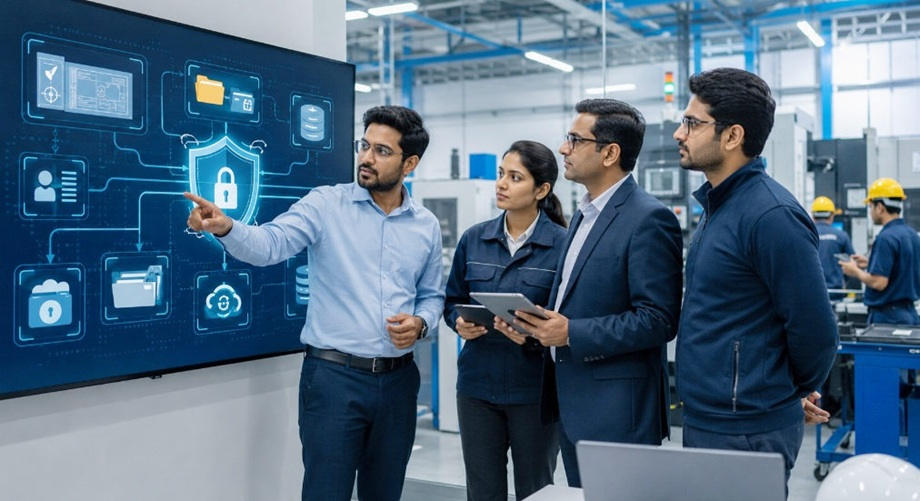
Manufacturing security is no longer only about factory gates, CCTV cameras, stores control and visitor entry. Today, valuable business information moves through emails, cloud folders, ERP systems, CAD software, customer portals, laptops, mobile phones, vendor networks and remote access tools. If this information does not have proper protection, the business faces operational, legal, financial and reputational risks.
ISO 27001 provides a structured Information Security Management System, also called ISMS, to identify, assess and control information security risks. For manufacturers, this means stronger protection for customer drawings, product designs, production plans, process parameters, inspection records, supplier data, employee records, financial information and business-critical systems.
In simple terms, ISO 27001 helps manufacturing companies protect the information that keeps production running and customers confident.
What ISO 27001 Means for Manufacturing Companies
ISO 27001 is an international standard for information security management. It helps an organization create a systematic framework to protect confidentiality, integrity and availability of information.
Confidentiality means only authorized people can access sensitive information. Integrity means information remains accurate, complete and protected from unauthorized changes. Availability means information and systems remain accessible when the business needs them.
For manufacturing companies, all three matter equally.
A customer drawing must remain confidential. A production process sheet must remain accurate. An ERP system must remain available when the team needs to plan production, issue materials, dispatch goods or raise invoices.
ISO 27001 for manufacturing industries does not work like a simple IT checklist. It asks the company to understand its business context, identify information assets, assess risks, select appropriate controls, train employees, monitor performance, conduct internal audits and improve the system over time.
This approach suits manufacturing because each manufacturing business has different risks. A precision machining company, aerospace supplier, electronics manufacturer, pharma unit, fabrication company, packaging unit and automotive component manufacturer will not have the same information security priorities.
Why Manufacturing Industries Need ISO 27001 Now
Manufacturing businesses now operate in a more connected and competitive environment. Customers expect faster responses, tighter confidentiality, digital communication, online document exchange and supply chain transparency. At the same time, cyber threats have increased.
Attackers no longer target only banks and software companies. They also target manufacturers because production downtime creates pressure. If ransomware locks production records, ERP data or dispatch files, the company may feel forced to pay or rush recovery.
Customer expectations have also changed. Many large organizations now ask suppliers about cybersecurity controls, data protection, access control, backup, incident response and confidentiality. Some customers include information security clauses in contracts. Others ask suppliers to complete security questionnaires during vendor onboarding.
ISO 27001 for manufacturing industries helps companies respond to these expectations professionally. It gives management a clear framework to show customers that information security is not handled casually.
Important Information Assets in Manufacturing Industries
Manufacturing companies often underestimate how much sensitive information they handle. The first step in ISO 27001 implementation is to identify information assets clearly.
Customer-related assets may include purchase orders, drawings, technical specifications, contracts, delivery schedules, complaints, pricing agreements and customer audit reports.
Engineering assets may include CAD files, design calculations, prototypes, tooling drawings, process designs, bills of material, product development records and design change approvals.
Production assets may include production plans, job cards, work instructions, machine settings, CNC programs, batch records, process parameters and maintenance schedules.
Quality assets may include inspection reports, calibration records, test certificates, nonconformity reports, corrective action records, customer rejection data and traceability records.
Commercial assets may include quotations, cost sheets, supplier pricing, payment details, financial reports, tax records, salary data and business plans.
IT assets may include ERP systems, email accounts, laptops, servers, cloud storage, Wi-Fi networks, backups, software applications, user credentials and network devices.
When these assets have no clear owner, no access control and no protection method, the organization becomes vulnerable. ISO 27001 helps manufacturing companies identify these assets, assign responsibility and apply suitable controls.
ISO 27001 Protects Customer Drawings and Technical Data
One of the biggest reasons ISO 27001 is important for manufacturing industries is the protection of customer drawings and technical documents.
Manufacturers often receive confidential drawings, CAD files, product specifications, inspection criteria, packaging instructions and process requirements from customers. These files may move across sales, design, purchase, production, quality, stores and suppliers.
Without proper controls, employees may share drawings through personal email, WhatsApp, unsecured cloud links or uncontrolled USB drives. A supplier may retain customer drawings after a job ends. A former employee may still have copies of technical documents. A wrong drawing revision may reach production.
These situations can damage customer trust and lead to serious business consequences.
ISO 27001 helps companies classify information, restrict access, control sharing, maintain document versions, define supplier confidentiality requirements and remove access when no longer required. As a result, customer information receives protection throughout its life cycle.
ISO 27001 Reduces Ransomware and Malware Risk
Ransomware can stop a manufacturing business within minutes. If attackers encrypt ERP data, production plans, quality records, dispatch files or shared folders, the company may struggle to continue operations.
The impact can include production delay, missed delivery commitments, customer escalation, payment delays, rework, loss of records and emergency recovery costs.
Many manufacturers assume antivirus alone will protect them. However, ransomware usually enters through phishing emails, unsafe downloads, weak passwords, unpatched systems, unsecured remote access or infected devices.
ISO 27001 for manufacturing industries supports a stronger defence. It promotes access control, malware protection, backup management, incident response, employee awareness, patching, logging, monitoring and business continuity planning.
More importantly, ISO 27001 forces the organization to ask practical questions. Are backups available? Has the company tested restoration? Who will respond to a ransomware incident? Which systems need priority recovery? How will production continue during system downtime?
These questions help management prepare before an incident occurs.
ISO 27001 Improves ERP and Business System Security
ERP systems are central to many manufacturing companies. They support purchase, stores, inventory, production planning, quality, dispatch, finance and management reporting.
If ERP access is weak, the business faces serious risk. Employees may access information beyond their role. Unauthorized changes may affect stock, pricing, production planning or dispatch records. Former employees may retain access. Shared logins may hide accountability.
ISO 27001 helps define role-based access control. It encourages approval before granting access, periodic review of user rights and immediate removal of access during employee exit.
Good access control is not only an IT requirement. It directly supports business discipline. When users access only what they need, the organization reduces misuse, errors and unauthorized changes.
ISO 27001 Helps Protect Intellectual Property
Manufacturing knowledge has real business value. Intellectual property does not include only patents and registered designs. It may also include tooling methods, fixtures, process improvements, machine programs, product development experience, cost calculations, vendor development information and unique production know-how.
If this information leaks to competitors, unauthorized vendors or former employees, the company may lose its competitive advantage.
ISO 27001 supports intellectual property protection through confidentiality agreements, access restrictions, information classification, secure transfer controls, supplier security, employee exit controls and monitoring.
For manufacturers who compete on technical capability, process know-how, cost efficiency or customer-specific solutions, this protection becomes extremely important.
ISO 27001 Strengthens Supplier and Vendor Controls
Manufacturing companies depend on many external parties. These may include raw material suppliers, job workers, calibration agencies, testing laboratories, transporters, machine maintenance providers, IT vendors, design consultants, website developers and outsourced service providers.
Some of these vendors may receive drawings, specifications, purchase orders, technical data, business information or system access. If the vendor does not protect the information properly, the manufacturer still faces the consequence.
ISO 27001 helps organizations evaluate suppliers based on risk. It supports confidentiality clauses, secure information transfer, access control, supplier monitoring and defined responsibilities.
A practical example is an outsourced job worker who receives customer drawings. The manufacturer should define how the drawing will be shared, who can use it, how long it can be retained and what must happen after job completion.
This level of control improves customer confidence and reduces supplier-related information leakage.
ISO 27001 Supports Production Continuity
Manufacturing companies cannot afford long downtime. When production stops, the impact reaches customers, suppliers, dispatch teams, finance teams and management.
Information security incidents can disrupt production in several ways. ERP systems may go down. Production schedules may become unavailable. Machine programs may get deleted. Quality records may become inaccessible. Email systems may stop working. Backup recovery may fail.
ISO 27001 requires organizations to think about business continuity from an information security angle. The company must identify critical systems, define backup requirements, plan recovery, assign responsibilities and test arrangements.
This does not mean every manufacturer needs expensive tools. A small manufacturing unit can still create practical continuity controls. It can maintain tested backups, identify critical records, define manual workarounds, document emergency contacts and train responsible employees.
ISO 27001 for manufacturing industries helps companies prepare for disruption instead of reacting in panic.
ISO 27001 Improves Customer Confidence and Vendor Approval
Customers want reliable suppliers. Reliability includes quality, delivery, cost, communication and information security.
A manufacturer may produce excellent products, but if it cannot protect customer drawings, contracts, designs or technical documents, customers may hesitate to share sensitive work. This becomes more important when the customer belongs to automotive, aerospace, defence, electronics, healthcare, engineering, export or technology-driven sectors.
ISO 27001 certification can strengthen the manufacturer’s profile during customer audits, tender submissions, supplier registration and corporate vendor approval.
Even when customers do not demand certification, ISO 27001-based implementation helps the company answer security questionnaires more confidently. It also shows that management takes information security seriously.
For manufacturers aiming to grow with larger customers, ISO 27001 can become a business advantage.
ISO 27001 Reduces Wrong Information and Revision-Related Risks
Manufacturing quality depends heavily on correct information. A wrong drawing revision, outdated work instruction, altered process parameter or incorrect inspection record can create product defects.
Information security includes integrity. This means the company must protect information from unauthorized or accidental changes.
ISO 27001 supports document control, access restrictions, change approval, record protection and accountability. These controls reduce the chance of wrong information reaching production or quality teams.
For example, if only authorized people can update a process sheet, and if the company controls the latest revision properly, production teams receive more reliable information.
This helps both information security and product quality.
ISO 27001 Helps Manage Remote Access and Digital Work
Many manufacturing companies now use remote IT support, cloud storage, customer portals, online meetings, mobile email and remote access to business applications.
These practices improve speed, but they also increase security risk.
Remote access can expose systems if the company uses weak passwords, shared accounts, unsecured devices or unrestricted vendor access. Cloud folders can expose documents if employees create public links or invite personal email IDs. Mobile devices can leak business data if they lack screen locks or security controls.
ISO 27001 helps manufacturing companies define remote access rules, authentication controls, acceptable use requirements, device security expectations and access review practices.
This becomes especially useful for companies with multiple branches, external consultants, outsourced IT support or traveling sales and service teams.
ISO 27001 Supports Legal and Contractual Compliance
Manufacturing companies may need to meet legal, regulatory and contractual requirements related to data protection, confidentiality, employment records, financial data, intellectual property, export controls, customer contracts and sector-specific obligations.
Many companies sign customer agreements that include confidentiality, data protection, access control, incident reporting or information handling requirements. Later, during audits or disputes, they struggle to show evidence.
ISO 27001 helps organizations identify applicable requirements and maintain compliance evidence. It also connects legal and contractual requirements with risk assessment and control implementation.
For management, this creates better visibility. Instead of depending on assumptions, the company knows what security obligations it has accepted and how it controls them.
For official information about the ISO 27001 standard, readers can refer to the ISO page on ISO/IEC 27001 information security management.
ISO 27001 Integrates Well With ISO 9001 and Other Manufacturing Standards
Many manufacturing companies already follow ISO 9001, ISO 14001, ISO 45001, IATF 16949, AS9100 or other sector-specific standards. ISO 27001 can integrate well with these systems because it follows a management system approach.
Manufacturers already understand process ownership, risk-based thinking, documented information, competence, internal audit, management review and corrective action. ISO 27001 builds on this discipline and applies it to information security.
For example, ISO 9001 may control document revision for quality reasons. ISO 27001 adds security questions. Who can access the document? Is it confidential? How will the company share it? What happens if someone leaks it? How does the company protect it from unauthorized changes?
This integrated thinking helps manufacturing companies manage both quality and information security more effectively.
Practical Areas Where ISO 27001 Applies in Manufacturing
ISO 27001 applies across the manufacturing organization.
In sales, it protects customer enquiries, quotations, contracts, NDAs, pricing and tender documents.
In design and engineering, it protects drawings, CAD files, product development records, specifications and design changes.
In purchase, it controls supplier communication, technical data sharing, vendor access and confidentiality.
In production, it protects production plans, process sheets, work instructions, machine programs and process parameters.
In quality, it protects inspection reports, test records, calibration data, customer complaints and corrective action records.
In stores and dispatch, it protects inventory data, packing details, customer dispatch records and traceability information.
In HR, it protects employee records, salary details, training records, access rights and exit information.
In IT, it controls networks, cloud applications, email, backups, user accounts, endpoint security and incident response.
This broad application makes ISO 27001 for manufacturing industries highly practical and valuable.
How Manufacturing Companies Can Start ISO 27001 Implementation
A manufacturing company should start ISO 27001 implementation with a clear scope. Management must decide which locations, departments, systems and processes will come under the ISMS.
The next step is to identify key information assets. This should include customer drawings, ERP data, production records, quality records, supplier information, employee information, financial data, IT systems and backups.
After that, the organization should assess information security risks. Practical risks may include ransomware, phishing, unauthorized ERP access, customer drawing leakage, supplier misuse, wrong file sharing, backup failure, device loss, outdated software and employee exit gaps.
The company should then prepare a risk treatment plan. This plan should define what controls it will implement, who will take responsibility and when actions will close.
Important controls may include multi-factor authentication, access control, backup testing, awareness training, information classification, secure file sharing, supplier security, incident response, asset management, patching and business continuity planning.
Manufacturing companies that need structured guidance can work with experienced consultants who understand both ISO 27001 and manufacturing operations. Inzinc provides practical ISO 27001 implementation support for manufacturing companies in Bangalore, with focus on risk assessment, ISMS documentation, control implementation guidance, internal audit and certification readiness.
For manufacturers in Karnataka and nearby industrial areas, structured guidance can make ISO 27001 implementation much easier. Inzinc provides practical ISO 27001 consultants in Bangalore support for manufacturing companies that need help with ISMS scope, risk assessment, documentation, control implementation guidance, internal audit and certification readiness.
Common Mistakes Manufacturers Should Avoid
Many manufacturers treat ISO 27001 as an IT project. This creates weak implementation because information security risks exist in sales, design, purchase, production, quality, stores, HR, finance and vendor management.
Another mistake is copying generic documents. Generic policies may not address real manufacturing risks such as customer drawing protection, CNC program backup, process parameter integrity, supplier sharing, shop-floor terminal access and production continuity.
Some companies focus only on certification. They prepare documents but do not implement controls properly. This approach may pass a weak document review, but it will not protect the business.
Manufacturers also make mistakes during access control. They allow shared logins, delay access removal, ignore role changes and forget to review vendor access.
Management should avoid these shortcuts. ISO 27001 works best when the company connects it to real business risks.
Why ISO 27001 Adds More Value Than Generic Cybersecurity
Generic cybersecurity advice often focuses on tools. It may recommend antivirus, firewall, password rules and backup. These controls matter, but they do not create a complete management system.
ISO 27001 for manufacturing industries goes deeper. It connects security controls with business context, risk assessment, legal requirements, roles, training, monitoring, internal audit and improvement.
A firewall cannot decide who should access customer drawings. Antivirus cannot classify confidential information. Backup software cannot ensure employees report incidents. A password rule cannot control supplier confidentiality.
ISO 27001 brings these areas together. It helps management build a security system instead of depending only on scattered controls.
Who Should Consider ISO 27001 in Manufacturing?
ISO 27001 is useful for manufacturing companies that handle confidential customer information, technical drawings, design data, ERP systems, production records, intellectual property or regulated information.
It is especially useful for automotive component manufacturers, aerospace suppliers, electronics manufacturers, precision engineering companies, fabrication units, medical device manufacturers, pharma manufacturers, industrial equipment manufacturers, packaging manufacturers, contract manufacturers, export manufacturers and defence suppliers.
Small and medium manufacturers can also benefit. They may not need a complex system, but they still need practical controls. ISO 27001 helps them build those controls in a disciplined way.
Business Benefits of ISO 27001 for Manufacturing Industries
ISO 27001 helps manufacturing companies reduce information security incidents and improve customer confidence. It strengthens access control, backup discipline, employee awareness, supplier security and incident response.
It also improves internal clarity. Employees understand how to handle confidential information. Managers know which risks need attention. IT teams receive better direction. Suppliers receive clearer expectations.
The company can also improve its position during customer audits and vendor approval processes. When customers ask about security controls, the organization can respond with evidence instead of informal explanations.
For growth-focused manufacturers, ISO 27001 can support larger customer opportunities and stronger market credibility.
Final Thoughts
ISO 27001 for manufacturing industries is important because manufacturing now depends on secure information as much as it depends on machines, people and materials. Customer drawings, production plans, ERP data, quality records, machine programs, supplier information and business communication all need protection.
A single information security incident can affect delivery, quality, customer trust, legal compliance and reputation. Therefore, manufacturers should not treat information security as a secondary IT activity.
ISO 27001 gives manufacturing companies a practical and internationally recognized framework to manage information security risks. It helps protect confidential data, maintain accurate records, support business continuity, improve supplier control and strengthen customer confidence.
Manufacturers that implement ISO 27001 properly do more than prepare for certification. They build a stronger, safer and more reliable business.
For companies that want long-term customer trust and controlled growth, ISO 27001 is not only a compliance standard. It is a business protection system.