
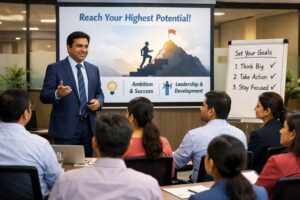
 Register to the Achieving Highest Potential Training Course from Inzinc Academy to help personnel realize one’s highest potential. Every organization wants better results. However, stronger results usually come from stronger people. Skills matter, experience matters, and systems matter. Yet, beyond all of that, there is another factor that shapes performance in a deep way: a person’s drive to grow, improve, recover, and keep moving toward a higher standard. Therefore, achieving one’s highest potential is not only a personal development theme. It is also a business theme, a leadership theme, and a culture theme. When people develop the right mindset, habits, and discipline, they do not merely do more work. Instead, they do better work, take more ownership, recover more quickly from setbacks, and contribute more meaningfully to the organization.
At Inzinc Academy (The Training Division of Inzinc Consulting India Pvt. Ltd.), our Achieving Highest Potential Training helps employees, leaders, and teams understand how to unlock stronger performance through appetite for success, urgency, curiosity, quick learning, leadership initiative, learning from the past, applying knowledge, accepting failures, thinking creatively, sustained effort, and a systematic approach. Moreover, this training goes beyond motivation alone. Instead, it gives participants a practical framework for personal growth and workplace achievement. Consequently, individuals become better prepared to develop resilience, set meaningful goals, support others, and contribute at a higher level.
Introduction to Achieving Highest Potential Training
The presentation introduces achieving highest potential as the process of pushing oneself to reach new heights and become the best version of oneself. It further explains that this journey involves multiple qualities and habits, including appetite, urgency, curiosity, quick learning, taking the lead, studying the past, accepting failures, and thinking out of the box. Therefore, the training presents achievement as a multi-dimensional process rather than a single motivational slogan.
The training also explains that achieving one’s highest potential requires a combination of regular concentrated efforts and a systematic approach. In other words, growth does not come only from ambition. Rather, it comes from disciplined action, reflection, adjustment, and consistency over time. As a result, this training is highly relevant for professionals, managers, leaders, and employees who want structured personal growth with direct workplace value.
Who Must Take This Training?
Employees Seeking Personal and Professional Growth
Employees who want to improve motivation, confidence, learning ability, resilience, and contribution at work will benefit strongly from this training.
Team Leaders and Supervisors
Leaders need to develop not only their own potential, but also the potential of others. Therefore, this training is highly useful for people who guide teams, delegate work, give feedback, and create performance culture.
Managers Responsible for Performance Improvement
Managers working on ownership, productivity, engagement, succession, and workplace growth will find this program practical and relevant.
HR, Learning, and Development Teams
HR and L&D functions can use this training to support employee development, growth mindset, recognition culture, and people effectiveness.
Organizations Building High-Performance Culture
Any organization that wants stronger accountability, resilience, ownership, and achievement-focused culture can use this training effectively.
Learning Objectives
By the end of this training, participants will be able to:
- Understand what achieving highest potential means in practical terms
- Recognize the habits and mindsets that support sustained growth
- Understand the role of appetite and urgency in achievement
- Develop curiosity and quick learning habits for continuous improvement
- Take more ownership and leadership in work
- Learn how studying the past can improve future decisions
- Apply knowledge from one field to another for stronger insight and innovation
- Accept failures more constructively and build resilience
- Develop a growth mindset and recover from setbacks
- Think out of the box while solving problems and pursuing goals
- Use regular concentrated effort more effectively
- Build a more systematic approach to personal and professional achievement
- Encourage others to grow through feedback, support, recognition, and challenge
Training Topics Covered
Overview of Topics
- Introduction to achieving highest potential
- How to achieve one’s highest potential
- Choosing the right field
- Appetite and urgency
- Curiosity and quick learning
- Taking the lead
- Study of the past
- Applying knowledge across fields
- Acceptance of failures
- Rising like a phoenix after setbacks
- Thinking out of the box
- Regular concentrated efforts
- Systematic approach to achievement
- Encouraging others to achieve
- Giving tasks for growth and development
- Appreciating achievements
- Setting higher targets
- Creating an atmosphere for achievement
- Announcing achievements
- Best practices in team building
How to Achieve Highest Potential?
The presentation explains that achieving one’s highest potential is a multifaceted process. It identifies strong appetite for success and a sense of urgency as key drivers. It also highlights curiosity, quick learning, taking the lead, studying the past, applying knowledge across domains, accepting failures, thinking out of the box, regular concentrated efforts, and a systematic approach. Therefore, the training does not treat achievement as luck or talent alone. Instead, it shows that potential is developed through repeated behaviour and deliberate mindset.
This matters greatly in organizations because many people want progress, yet they do not always build the habits that support it. As a result, performance may remain inconsistent even when ability is present. This training helps close that gap.
Choosing the Right Field
A strong point in the presentation is the emphasis on choosing the right field. It explains that people perform better when their field aligns with their interests, values, and strengths. Moreover, when individuals care deeply about what they do, effort becomes more sustainable, and improvement becomes more natural. Therefore, this section is useful not only for career planning, but also for role alignment and employee development within organizations.
The material also advises participants to explore interests, identify what brings fulfilment, reflect on values, and take stock of strengths and skills. Consequently, the training encourages self-awareness as a foundation for stronger long-term performance.
Appetite and Urgency
The presentation describes appetite as the desire for achievement and success, while urgency is the sense of importance and immediacy attached to goals. Together, they create a strong motivational force. Appetite keeps people going even when setbacks arise. Urgency pushes them to act rather than delay. Therefore, this section is especially relevant for performance-driven workplaces where momentum and follow-through matter.
Without appetite and urgency, people may remain capable yet under-committed. However, when both are present, individuals are more likely to take initiative, maintain pace, and keep working toward meaningful results.
Curiosity and Quick Learning
The training identifies curiosity and quick learning as crucial for reaching higher levels of achievement. Curiosity drives people to seek new knowledge and experiences. Quick learning helps them absorb, adapt, and apply that knowledge effectively. In addition, the presentation advises participants to ask questions, seek new experiences, remain open to feedback, and adapt to new information. Therefore, this section supports a mindset of growth and continuous improvement.
This is especially important in business because workplaces change constantly. Employees who learn faster often adjust faster, contribute more widely, and grow into larger responsibilities more effectively.
Taking the Lead
The presentation explains that taking the lead is essential for achieving one’s highest potential. When people take the lead, they gain more control over direction, standards, and outcomes. They can identify areas needing improvement, take initiative, and demonstrate ownership. Furthermore, taking the lead can inspire others and strengthen a person’s sense of responsibility toward work.
Therefore, this training is valuable not only for formal leaders, but also for individual contributors who need to grow into stronger ownership roles.
Studying the Past and Applying Knowledge
The presentation highlights two powerful growth habits: studying the past and applying knowledge from one field to another. Studying the past helps people learn from earlier successes, failures, resilience, and perseverance. It gives perspective, inspiration, and better judgment. Likewise, applying knowledge across fields helps people discover patterns, generate better insights, and produce innovative solutions.
These are especially valuable in organizations because improvement often comes from reflection and transfer of learning. Teams that study prior experience carefully, and then connect ideas across functions, tend to solve problems more intelligently.
Acceptance of Failures and Rising Like a Phoenix
A very practical strength of the presentation is its treatment of failure. It explains that failure is inevitable in any meaningful pursuit. However, success depends on how people respond to it. By accepting failures, individuals can learn from mistakes, move forward more constructively, and build resilience. Moreover, the section on rising like a phoenix encourages people to assess setbacks, learn from them, and return stronger with a growth mindset.
This is highly relevant in the workplace because high performers are not people who never fail. Rather, they are often people who recover, reflect, and improve more effectively than others.
Thinking Out of the Box
The presentation describes thinking out of the box as an essential skill for achieving one’s highest potential. It involves moving beyond traditional patterns of thought, exploring new perspectives, and taking creative risks. As a result, individuals can discover innovative solutions, identify fresh opportunities, and unlock stronger performance.
Therefore, this section is especially useful for organizations that want employees to solve problems creatively rather than repeating the same responses to changing situations.
Regular Concentrated Efforts and a Systematic Approach
The training emphasizes that desire alone is not enough. Regular concentrated efforts are necessary because consistent effort over time builds knowledge, skill, and confidence. At the same time, a systematic approach helps people break complex goals into smaller tasks, create a timeline, track progress, and stay organized and focused. Consequently, participants learn how discipline and structure support achievement in a realistic way.
This makes the training especially practical. It connects motivation with execution, which is where many development efforts succeed or fail.
Encouraging Others to Achieve
A distinctive feature of this presentation is that it extends beyond self-development into leader and team responsibility. It explains that encouraging others to achieve benefits not only the individual, but also the team and the organization. The presentation recommends constructive feedback, recognition of achievements, clear expectations, support through resources or mentorship, and leading by example. Therefore, the training helps leaders understand how to create growth in others, not just in themselves.
This is valuable because a strong achievement culture does not grow from slogans. Instead, it grows through daily actions that support confidence, effort, improvement, and accountability.
Giving Tasks, Appreciating Achievements, and Setting Higher Targets
The presentation also explains that giving the right tasks can help people develop skills, expand confidence, and move toward their highest potential. However, the level of challenge must be balanced. Tasks that are too easy do not stretch people, whereas tasks that are too difficult may discourage them. Likewise, appreciating achievements boosts morale, confidence, and motivation. Setting higher targets can also drive growth, provided goals remain challenging but realistic.
Therefore, this training gives managers a useful performance development framework: assign wisely, recognize meaningfully, and challenge progressively.
Creating an Atmosphere for Achievement
Another important theme in the training is culture. The presentation states that a supportive environment, encouragement from peers and mentors, and access to help when needed all contribute to achievement. In addition, announcing achievements can motivate individuals and inspire others through positive visibility and healthy competition. Consequently, the training helps organizations think beyond individual motivation and focus on the broader environment that enables people to do their best work.
Practical Benefits of This Training
After this training, participants can expect greater self-awareness, stronger growth habits, better resilience, more disciplined effort, and improved goal focus. In addition, leaders can expect better tools for encouraging, recognizing, and developing others. As a result, organizations can strengthen ownership, morale, performance, and achievement culture at the same time.
Why Choose Inzinc Academy?
At Inzinc Academy (The Training Division of Inzinc Consulting India Pvt. Ltd.), we design practical workplace training that connects mindset with measurable work behaviour. Our Achieving Highest Potential Training is not limited to inspiration alone. Instead, it gives participants and organizations a structured way to build motivation, resilience, ownership, disciplined effort, and supportive culture. Therefore, the learning becomes useful both for personal growth and for organizational performance.
Contact Us
To discuss Achieving Highest Potential Training for your organization, contact us at ic@inzinc.in